
Designing for a Sense of Place
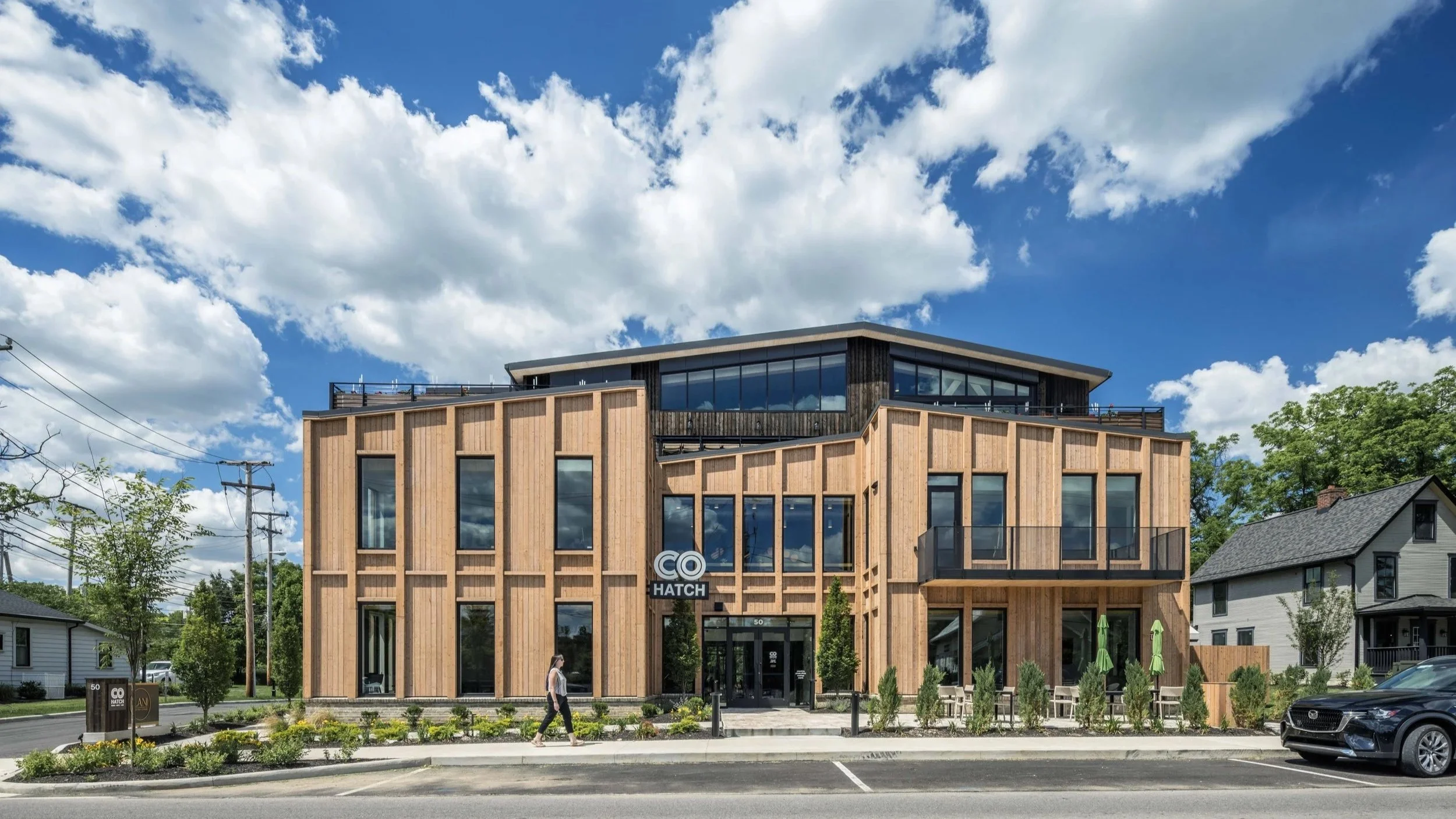
Much of our work is located in the suburbs around Columbus. While every community is different, many face a similar challenge. In the post-war years, development often prioritized convenience and efficiency over creating a strong sense of place. Wide roads, large parking lots, and separated land uses made it difficult to create the kind of environments people enjoy walking through and spending time in.
What I find interesting is that people are naturally drawn to places with a distinct identity. Historic downtowns, older neighborhoods, and traditional main streets tend to be popular not because of any single building, but because they offer a coherent experience. The buildings relate to each other. The streets feel comfortable to walk along. People have reasons to stay rather than simply pass through.
When we worked on COhatch Powell, I spent a lot of time thinking about what makes downtown Powell feel different from many newer developments. The scale is comfortable. The streets are walkable. Local businesses and public spaces create opportunities for people to interact. There is a sense of character that has been built over time.
The project gave us an opportunity to contribute to that environment. Rather than creating an object that stands apart from its surroundings, we focused on how the building would participate in the life of the town. How it meets the street. How people gather inside. How the materials and scale relate to the neighborhood around it.
I don’t think contextual design means copying historic architecture. It means understanding what people value about a place and finding ways to reinforce those qualities. Every project should contribute something positive to its surroundings while respecting the character that already exists.
For me, that is one of the most important responsibilities of architecture.